Before Route 66 became America’s most iconic highway, it began as nothing more than an idea – one that required vision, determination, and someone willing to bring it to life. That person was Cyrus Stevens Avery, a Tulsa businessman and public servant whose efforts helped shape not just a roadway, but a lasting piece of American identity. Known today as the “Father of Route 66,” Avery played a crucial role in developing the highway that would eventually stretch from Chicago to Los Angeles, transforming travel, commerce, and culture across the nation.

In the early 1900s, traveling across the United States was difficult. Roads were often unpaved, uneven, and unreliable, making long-distance travel a challenge. Cyrus Avery recognized this problem as an opportunity. As a leader in the Good Roads Movement, he believed a connected highway system could drive economic growth and open new opportunities for cities like Tulsa. Avery did not just advocate for better roads – he played a direct role in building them. Serving as a state highway commissioner, he helped shape Oklahoma’s early road network. He also contributed to national planning efforts that eventually led to the creation of the U.S. highway system. His influence went even further, helping establish the numbering system still used today and supporting the now-iconic “66” designation.

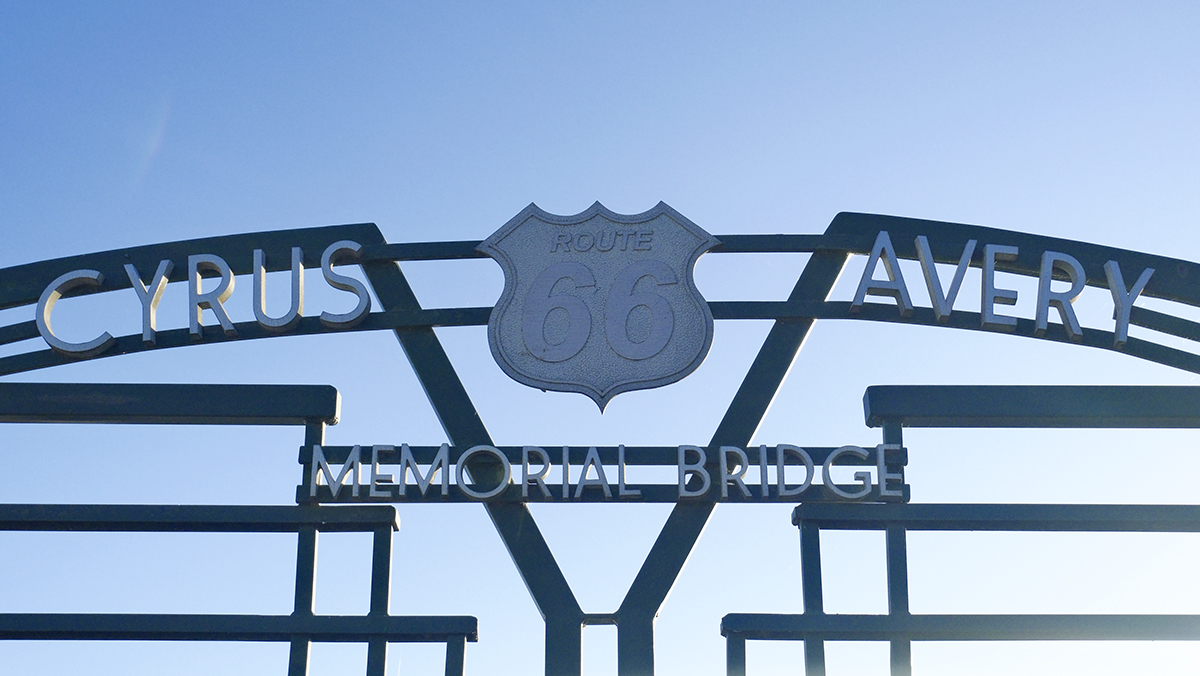
One of the most notable monuments honoring Avery is the Cyrus Avery Centennial Plaza, located near the historic 11th Street Bridge. The plaza features the “East Meets West” sculpture, a striking visual representation of the moment when old transportation methods met the new age of automobiles. It shows Avery driving west in a Model T, meeting a horse-drawn wagon heading east, symbolizing a turning point in American history.
Cyrus Avery’s legacy and impact go far beyond the creation of a single highway. His work helped lay the foundation for modern transportation in the country. It influenced how roads are planned, built, and connected even today. Route 66 remains a cultural symbol of freedom, exploration, and opportunity. From road trips to roadside attractions, Mother Road continues to inspire travelers from around the world.

Avery’s impact goes far beyond the creation of a single highway. His vision helped shape a road that became a symbol of adventure, connection, and opportunity across America. Today, that legacy is still visible in Tulsa, where the Cyrus Avery Centennial Plaza stands near the historic 11th Street Arkansas River Bridge, honoring the man who helped bring Route 66 to life. Travelers who pass through continue to experience the lasting influence of Avery’s work, following a path that changed the way America moves. The “East Meets West” sculpture, a potent visual representation of change in American history, is in the center of the plaza. It shows Avery traveling west in a Model T and encountering an eastbound horse-drawn wagon. More than just two travelers’ cross paths, this moment symbolizes the transition from antiquated modes of transportation to the contemporary era of automobiles.