In the two previous columns on Art Deco, I introduced readers to events celebrating the 100th anniversary of Art Deco around the world and guided them through the Decopolis Tulsa Art Deco Museum.
But the most significant Art Deco attraction in Tulsa is architecture! Tulsa has a historic Deco District located downtown along South Boston Avenue. The Deco District landmarks include 10 buildings, according to https://www.tulsa.tours/deco-district.
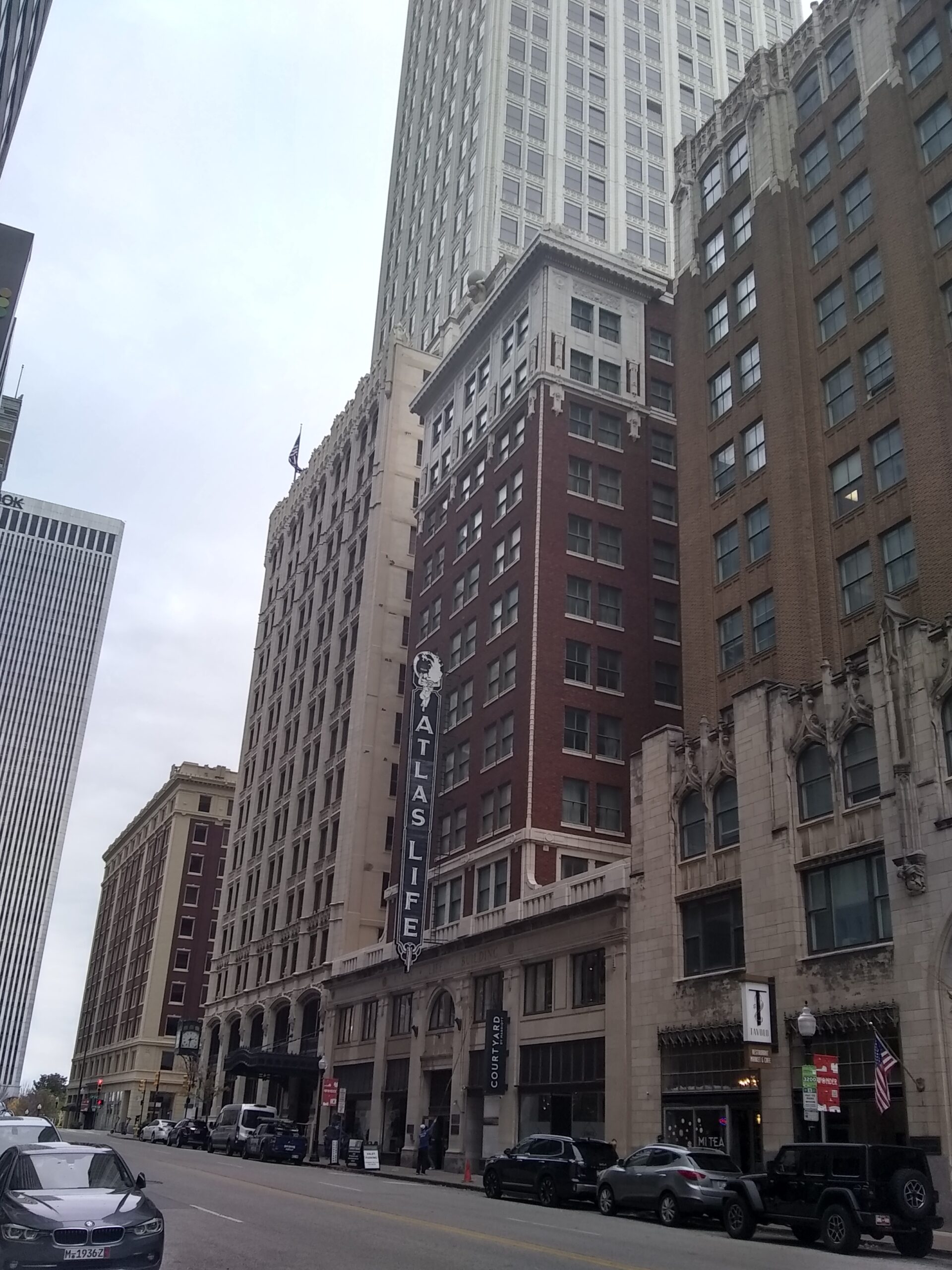
These are Exchange National Bank aka Oil Man’s Bank (now 320 South Boston,) Cosden Building (now Mid-Continent Tower,) Atlas Life Building (now Courtyard by Marriott,) Philtower, Philcade, Tulsa Club (now Tulsa Club Hotel,) Mayo Hotel, Pythian Building, PSO Building (Public Service Company of Oklahoma,) and ONG Building (Oklahoma Natural Gas).
“Deco District landmarks are from the 1910s to early 30s when the Great Depression halted new construction projects,” Tulsa Tours, the leading company in local tourism, informs on its website. “Forty buildings within the Oil Capital Historic District are registered with the National Park Service.”
At the beginning of the 20th century, Tulsa became the Oil Capital of the World. The city boomed with petroleum company headquarters, financing, land leasing, equipment leasing, oil well supplies, and trade publications, as Tulsa Tours reveals.
“At one point (no longer the case) Tulsa did have over 80 Art Deco buildings, but many have been demolished,” Becki DeVour, Tulsa Tours’ Art Deco guide, says. “It’s a mixture of residential, offices, schools, fire stations and public use spaces.”
DeVour also created an informative display of Tulsa’s Art Deco architecture, placed in the exterior windows of the Philcade Building (5th and Boston) on 5th Street, Tulsa.
All that has been said above overwhelmed me as I conducted my research on the Art Deco presence in Tulsa. Someone can call Tulsa ‘Art Deco City’ because of the many Art Deco-style buildings! The next goal of my investigation into Art Deco was to find out if any celebrations or exhibitions dedicated to the 100th anniversary of Art Deco were scheduled in Tulsa in 2025.
But there was none of that! I thought that was terribly wrong. So, an idea to organize an Art Deco Fest at Tulsa Community College (TCC) was born.
I spent the next four months trying to make the TCC Art Deco Fest happen, doing a lot of things myself, such as booking the space for the event, writing the script, program, and press release, finding engaging speakers, conducting a rehearsal, sending dozens of emails with invitations, distributing flyers at the TCC campuses and downtown Tulsa. It was a huge volunteer project, which I enjoyed.
Three student-volunteers from the TCC Connection, the student newspaper, and two volunteer speakers joined the project, and the Art Deco Fest rocketed on Dec. 12, 2025, at the TCC Metro Campus Student Life Commons area!
DeVour gave a presentation on the most impressive and desirable Art Deco buildings to visit in Tulsa at the fest. These are Tulsa Club (1927,) Oklahoma Natural Gas (1928,) Boston Avenue United Methodist Church (1929,) Public Service Company of Oklahoma (1929,) Gillete-Tyrell (Pythian) Building (1930), and Philcade Building (1931.)
All six buildings exemplify lavish, spectacular Art Deco exterior and interior designs, characterized by a subdued emphasis on verticality, geometry, and symmetry, which are hallmarks of the style. The buildings resemble palaces, reflecting the enormous wealth of the Oil Capital of the World at the beginning of the 20th century.
William Franklin, artist and owner of the Decopolis Tulsa Art Deco Museum, highlighted differences between Art Deco and Art Nouveau styles (both began to develop at about the same time) in his talk. Franklin’s analysis of Art Deco was precise and exciting.
Who would think, for example, that gazelle images define Art Deco, and dragonfly shapes usually belong to Art Nouveau? A detailed, remarkable comparison of the two art styles can also be found on Decopolis’s website.
Tulsa Tours offers paid tours around the Deco District, and Decopolis store is glad to share a free walking map of ‘Tulsa’s amazing downtown Deco District’ on its website https://decopolis.net/pages/deco-district-in-depth-tour.
The Art Deco Fest was finalized by choosing winners in the Art Deco Fest logo and fashion contests. The artist Chio Mora, a former TCC student, won both contests and received two $95 award certificates from Tulsa Tours.
The information presented at the event surprised some guests.
“I have lived in Tulsa my entire life, but I did not know much about Tulsa’s Art Deco architecture before the fest,” said Quinten Wright, TCC student. “I enjoyed participating in the event.”
Driven by positive vibes and a warm atmosphere at the fest, a few of us stayed after the end and chatted about the arts. Then, we decided to have a photo of us together as a memory. We stood in front of the ‘Art Deco’ sign on the screen, hugging each other with excitement for the picture taking. That moment and the entire festival will stay in our hearts forever.