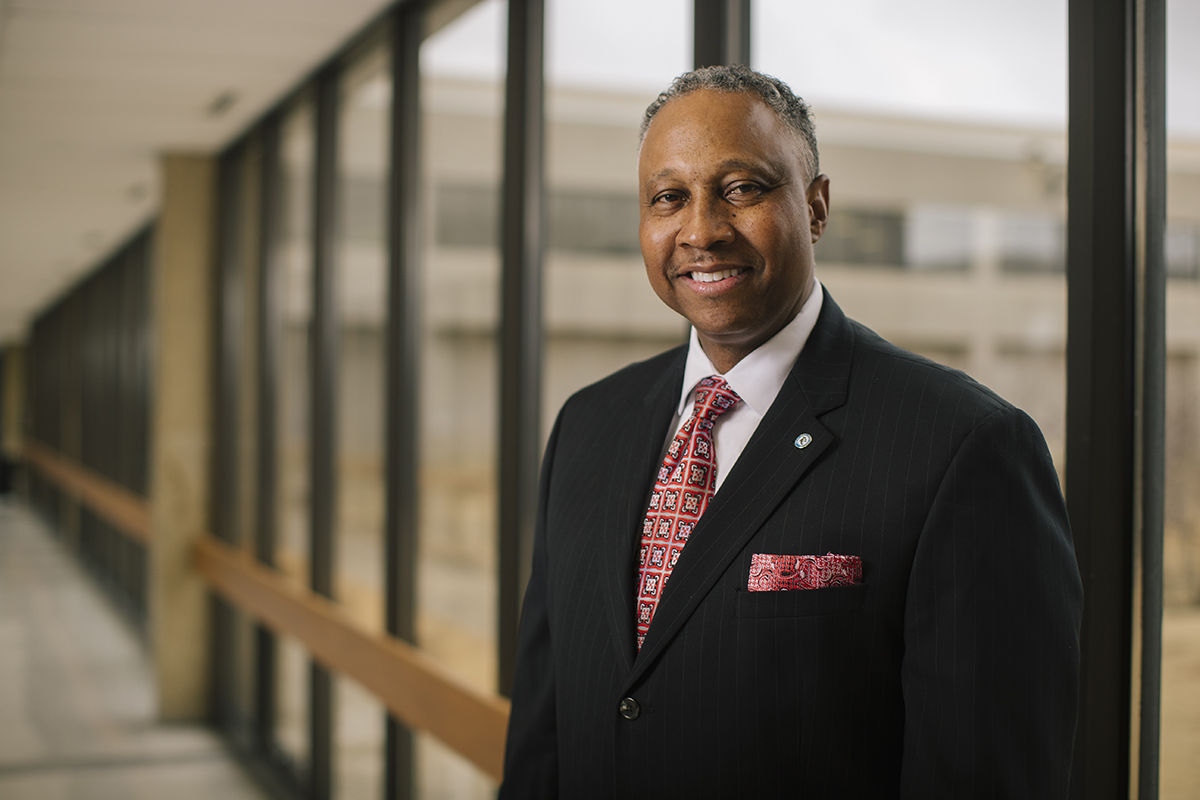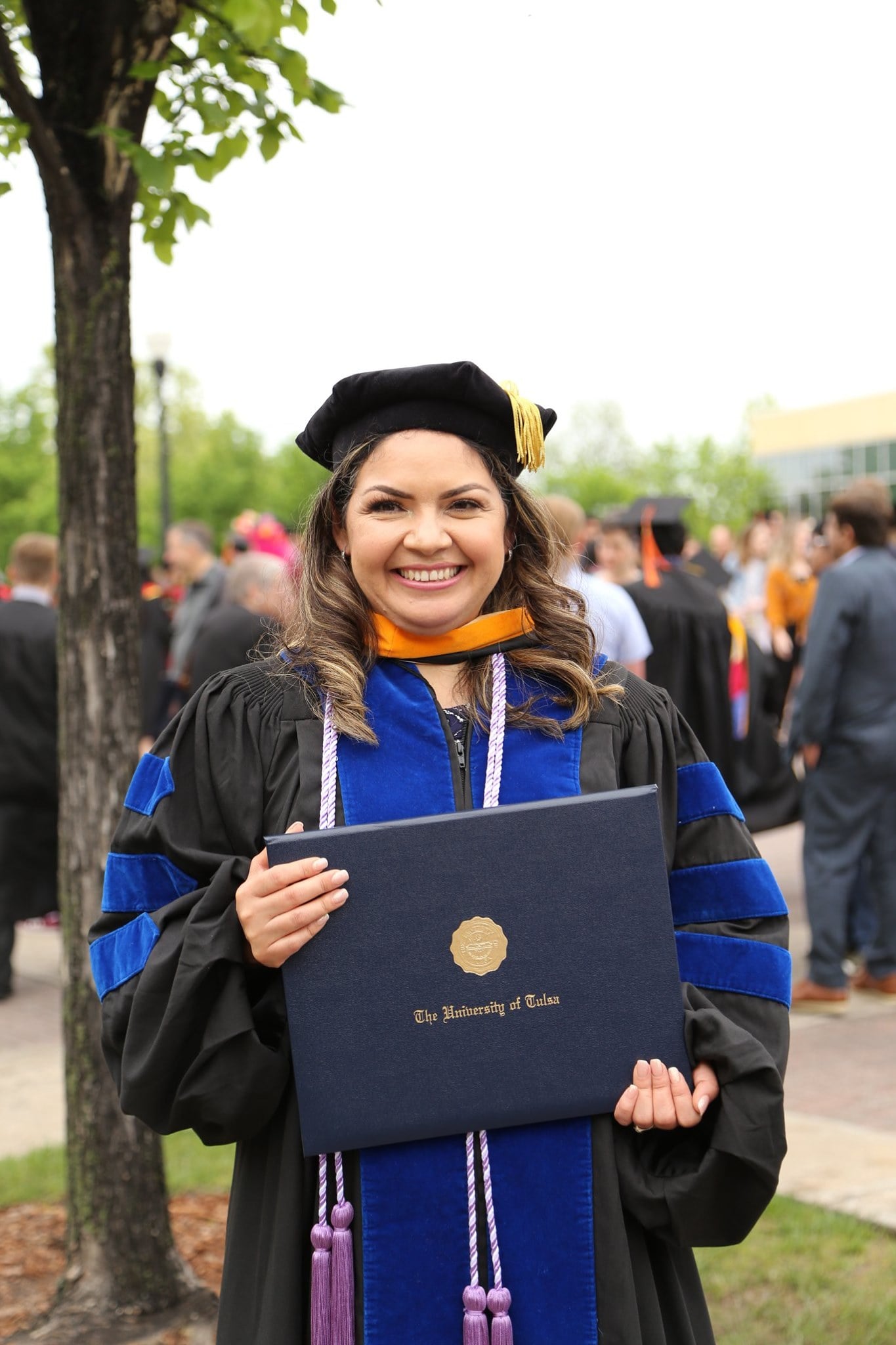
Dr. Francisca Trujillo is a nurse practitioner and founder of Trujillo Multi-Healthcare, a general medicine clinic specializing in diabetes care. Trujillo Multi-Healthcare addresses a broad range of health conditions and diseases that can arise throughout a person’s lifetime, such as hypertension, anemia, eating disorders, as well as mental health disorders.
Her vision is to improve access to medical care for resource-constrained individuals by prioritizing effective communication between doctors and patients. She is a Tulsa Community College alumna and believes her time at the institution was an essential steppingstone in her career as a nurse.
In a conversation with the TCC Connection, she shares her journey since graduating from TCC in December 2005, how it ultimately led to becoming a nurse practitioner, and the valuable insights she has gained along the way.
TCC Connection: Can you share about your journey from your time at TCC to becoming a nurse practitioner and clinic owner?
Francisca Trujillo: I earned my associate degree in nursing at Tulsa Community College (TCC), which gave me the foundation to continue my passion for providing care for the community. After TCC, I basically worked in (a) hospital for a few years, and then I went to the clinic setting.
At that time, clinic nurses were not as common as hospital nurses, but the hospital where I was at started a pilot [program] for clinic nurses, and I was a part of it. It worked well because I was able to do [patient] education, and health assessments that medical assistants [cannot] do.
I left shortly after and decided to pursue my bachelor’s degree in nursing at the University of Oklahoma (OU). After that, I decided to go to medical school.
However, by that time, I already had a family and saw some challenges getting into medical school. Therefore, I decided to do the Doctorate in Nursing Practice program at (the University of Tulsa). I was in the first cohort, which was a good experience as well, and as I said, TCC gave me the foundation to pursue further nursing career opportunities.
TCC Connection: Were there any professors, courses, or experiences in college that particularly influenced your career path?
Francisca Trujillo: Yes, there were several nursing instructors, even though I will not be naming them. There was one who was very supportive, and she explained the process of pursuing a bachelor’s degree.
Her sister was [a part of the] faculty at the OU (University of Oklahoma) College of Nursing, so she had additional information that she was able to provide, and it prompted me to look at OU as the next step in my nursing career. I also felt like the nursing instructors at TCC prepared us well to take the nursing board exams and to go out into the field and take care of patients.

TCC Connection: Looking back, what was the most valuable lesson you took away from your time at TCC?
Francisca Trujillo: I believe that the most valuable lesson is that there is more beyond an associate degree in nursing. Having gone through [both] the associate degree and then the bachelor’s degree, I felt like the bachelor’s degree at OU, even though it was good, was less intense because I was more prepared with my experience at the TCC nursing program.
It may have been because it was my first program, and nursing is intense anyway. I felt like there were more challenges, and there was an expectation of doing things in a certain order, which prepared you [for] the end, which was the goal, [ultimately] preparing to pass the boards.
TCC Connection: What does a “day in your life” look like now as both a clinician and a business owner?
Francisca Trujillo: A typical day starts with getting up early and making it to the clinic at least 30 minutes before we start, so we can prepare. We must review the patient charts and make sure we have everything we might need to provide the best care possible, such as test results, and we also make sure that our lab services are up to standard.
We are a walk-in clinic, so throughout the day, we operate as a family practice and host diabetes education programs. Basically, we just try to help anybody who walks through the door.
We also try to host events to connect with our community and build trust. I try to have a good mixture of different types of activities when we are not as busy, such as Zumba sessions, free health education events, and free breast exams. We do a lot of these to provide access to our community that they may not be able to afford.
After that, I go home and be a mom. I try not to do a lot of work when I get home so that I can keep work and family separate, but sometimes I may be on call, and so I will have to review some critical lab values or imaging. At the end of the day, I am a business owner, and I am responsible for the well-being of my patients.
TCC Connection: Have you had any mentors or role models who guided you through your career journey?
Francisca Trujillo: I do have many mentors within my circle, but there is one person [who] is very valuable. She is a previous supervisor where I used to work and has been a nurse for many years. She is very knowledgeable, very kind, and has been able to guide me whenever I need to decide careerwise.
One piece of advice that she has given me is to take care of myself. She always reminds me that I am important, and my family is important. I am achieving goals, and I am happy to be doing this, but I need to set boundaries with myself.
TCC Connection: How do you think your education prepared you for the realities of healthcare leadership and entrepreneurship?
Francisca Trujillo: I think I had a very good education throughout my career. The TCC program helped me prepare for the nursing profession, the [Bachelor of Science in Nursing] helped me get involved with community and leadership roles, and the (doctoral) degree helped prepare me to be at the clinician level. It also helped me establish a business plan and look beyond working as a clinician.
The training I received involved identifying gaps in clinical care and creating a program that can fill them. We actually went through the whole process of looking at how to run a startup, and I am very thankful to the faculty for doing that for us because it really did make things easy for me.
TCC Connection: What was your vision when you founded Trujillo Multi-Healthcare, and how has that vision evolved?
Francisca Trujillo: My vision was to create a safe space for patients to come and get their healthcare needs taken care of, and to create affordable and quality care, and to be able to receive the tools and dignity of care in a way that was effective, trustworthy, and at the same time cost-effective.
In nursing school, you are taught to take care of people, and as a nurse, you do not even know how much patients are charged because it is not part of your responsibility. It was only in the doctoral program that I learned about the business aspect of healthcare.
I feel like if we, as nurses, had that knowledge, we could make small changes so that it [would be] more affordable. For example, we could prescribe cheaper medications that could be just as effective. We are expecting patients to be compliant, but they may not have the means, and I think that we are missing out on some of the opportunities to help that patient if we do not consider the cost.

TCC Connection: How do you ensure your patients receive compassionate, individualized care in a busy practice?
Francisca Trujillo: I basically do a series of risk assessments. We need to look at the whole picture – the biopsychosocial self, and not just the disease. I try to help (patients) establish barriers (within) their lifestyle, such as work schedules or meal plans.
We know that meal plans must be individualized for them to work, and that is an essential part of diabetes management, so I adapt their meal plan to what they are already eating. We try to find that happy medium so that patients can choose healthier options with what they already have.
TCC Connection: What advice would you give to students or young alumni who dream of starting their own healthcare practice?
Francisca Trujillo: I would tell them not to be afraid to run a business in healthcare. If you have a passion and you see a need, then definitely go for that because we need more healthcare professionals.
Do your research and do your best to fill a gap but also don’t lose track of helping someone else. Healthcare can be lucrative in a way, so don’t focus on the money part but on taking care of the patient. I feel like it will be more satisfying and will give you a sense of self-fulfillment from making an impact.
TCC Connection: If you could go back and give your college self one piece of advice, what would it be?
Francisca Trujillo: If you have a degree in mind, just keep going and try to do it as early as possible. It took me a long time to get my (doctoral) degree; I got my associate degree in 2005 and my doctorate in 2019.
I had to stop because I did not have the resources, and I also had a family. It is never too late, but when you have other responsibilities, it can take longer because it’s harder to balance it all.