On Oct. 1, 1960, Nigeria declared its independence, joining the sovereign states of the world. This day stands as a testament to Nigeria’s resistance and the unyielding spirit of a people determined to shape their own destiny.
Decades later, for Nigerians both in Nigeria and in the diaspora, Oct. 1 every year remains a day to hold dear to their hearts and cherish because of what it represents.
Nigeria is home to over 230 million people, making it Africa’s most populous nation, the sixth most populated country in the world, and one of the most culturally diverse societies among nations.
From the ever-bustling markets of Lagos to the innovative hubs of Abuja, Nigeria prides itself on its dynamic and energetic outlook on life. This spirit has transcended national borders, and it is exhibited by Nigerians all over the world. In the United States, the Nigerian community stands out for its traditions of excellence and professional success.
According to a 2018 article, 37% of Nigerians living in the United States held bachelor’s degrees, 17% had earned master’s degrees, and four percent held doctorates. Nigerian Americans have made notable contributions, particularly in technology, healthcare, business, and the arts, with several success stories as proof of these impressive feats.
In 2023, the U.S. Deputy Secretary of the Treasury, Wally Adeyemo, emphasized the role of the Nigerian entrepreneurs and diaspora in driving economic growth and investments, stating that the Nigerian American community brings “rich culture, a penchant for entrepreneurship, and wide-ranging economic and social contributions.”

(Photo by Osahon Igharo Minister / TCC Connection)
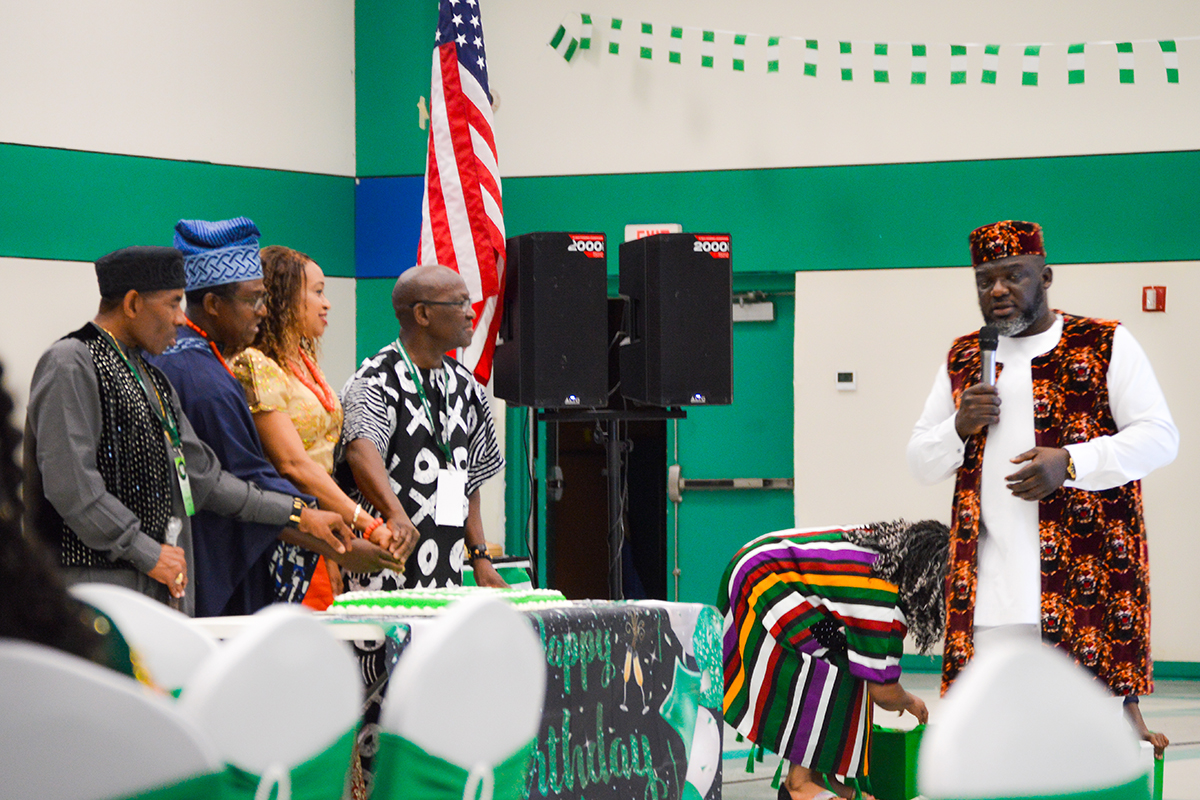
On Oct. 4, the spirit of celebration was alive and well in Tulsa, as the United Nigerian Association of Tulsa (UNAT), the local community of Nigerians in Tulsa, hosted an event to commemorate Nigeria’s independence. It was a colorful event, with green and white colors flowing all over the hall, guests dressed in various beautiful Nigerian attires, and a wide range of Nigerian delicacies to go around for all attendees.
TCC Connection sat with the chairman of UNAT, Stephen Erue, and talked about the organization and what it represents, as well as the implications of the Independence Day celebration it hosted.
“When I first came to Tulsa, I met this organization,” Erue recalled. It was formed by Nigerians who longed to create a communal style of living as it exists back home, and the “little seed” they planted has flourished. Formed in 1975, the association has grown into a pillar of community for Nigerians living in Tulsa.
It brings Nigerians living in Tulsa together for cultural events, community outreach, and mutual support. However, it goes a step further by sharing the diverse Nigerian culture with non-Nigerian immigrants.

By sharing food, music, and celebration, the organization fosters cultural exchange and unity, helping others experience the warmth and richness of Nigerian culture, creating bridges between different cultures, and ultimately building lasting connections.
UNAT also plays a key role in cultural education, particularly for second-generation Nigerians growing up in the U.S., by setting up programs that ensure they learn foundational aspects of Nigerian culture.
Erue said, “We set up a program during spring break when our children are on holiday. We tell them what their names stand for. A lot of them cannot pronounce their Nigerian names. So, we encourage them to ask their parents why they were given those names.”
Erue also touched on the Nigerian drive for excellence, a trait that has defined both the community at home and abroad. He said, “In many Nigerian homes, the minimum educational goal is a first degree. Wherever we are, we always aim for the best.”

Beyond cultural preservation, UNAT seeks to foster a support network for Nigerians in Tulsa.
Erue said, “One of my goals is to have a Nigerian house, a community where you can just stroll in, relax, play games, eat Nigerian pepper soup, and feel at home. We want a community that is caring, that looks out for each other.”
As a vision for the next decade, Erue shared that the organization seeks to build growth systems, promote education, and ensure the well-being of Nigerians in Tulsa. This will enable them to contribute significantly to the city and the nation in general.
He said, “I want to see Nigerians doing well in academics, in business, and in their trades. If they are doing well, when we call for support, they will be able to support and ultimately contribute to the affairs and development of this city.”

From its more than 250 ethnic groups to its millions of citizens at home and abroad, Nigeria continues to stand as a symbol of resilience and unity. The celebration in Tulsa reflected that same spirit, one that seeks the best in itself and for its community.
The United Nigerian Association of Tulsa’s Independence event captures the beauty of Nigerian culture, how well Nigerians have integrated into American society, and the extent to which they are fostering vibrant cultural relations through the colors, music, and cuisine.
The celebration revealed how a community rooted in culture, education, and ambition is giving expression to its identity. For Nigerians in Tulsa, the United States in general, and beyond, Independence Day is a living expression of who they are and how far they have come.
For more information, visit https://unatok.org/